
You’re prepping for technical interviews, and the career assessment keeps asking: “front-end developer” or “software engineer”? The choice feels permanent, but nobody explains what your Tuesday afternoon actually looks like in either role.
The decision between being a front-end developer and a software engineer shapes your compensation, specialization depth, and career flexibility for years to come.
Front-end developers focus on user interfaces: implementing designs, ensuring responsiveness, and creating the visual layer users click through. On the other hand, software engineers handle broader system architecture: designing scalable applications, building APIs, and working across the full technology stack.
This guide breaks down key differences between these roles: daily responsibilities, required skills, career progression paths, job market demand, and compensation expectations. You’ll understand which path matches your strengths and what that choice means for your earning potential.
What are the differences between a front-end developer and a software engineer?
Front-end developers and software engineers both write code professionally, but they solve fundamentally different problems. One path promises visible products that users interact with daily. The other offers broader systems work and higher pay ceilings.
Both require real programming skills, but the day-to-day reality and long-term trajectory differ significantly:
Let’s examine each difference in more detail.
Responsibilities
Front-end developers spend their days implementing what users see and interact with. You translate design mockups into pixel-perfect HTML and CSS, build interactive components with JavaScript frameworks, and ensure everything works smoothly across browsers like Chrome, Safari, and Firefox.
Your pull requests focus on UI polish: fixing alignment issues, adding loading states, and making sure the mobile layout doesn’t break.
Software engineers work at a different level of abstraction. As a software engineer, you design the system architecture that supports those front-end features: how data flows between services, which databases store what information, and how the application scales when traffic spikes.
Your code reviews cover algorithm efficiency, security considerations, and whether adding this feature creates technical debt that haunts the team six months later.
The scope difference matters practically. Front-end developers might spend a week perfecting the user experience of a checkout flow. Software engineers spend that same week designing the inventory management system that enables checkout.
Both roles require real programming skills, but the problems you solve and the impact radius of your decisions differ substantially.
Skill set requirements
Front-end developers master the browser environment. You write semantic HTML that screen readers understand, craft CSS layouts that adapt from phone screens to 4K monitors, and build React components that re-render efficiently.
You debug browser console errors, optimize image loading, and implement accessibility standards. The tools may change — Vue.js replaces Angular, CSS Grid replaces Flexbox workarounds — but the core challenge stays constant: making complex interfaces feel simple.
Software engineers need broader technical foundations. You understand algorithm complexity because choosing the wrong data structure tanks performance at scale. You design database schemas that prevent data inconsistencies. You write APIs that other teams depend on.
You implement caching strategies, set up monitoring systems, and debug production incidents. The languages vary by company (Python at some, Java at others), but the underlying systems thinking remains essential.
This difference often shows up in interview prep. Front-end developer interviews test your ability to build responsive layouts and optimize React performance. Software engineer interviews test data structures, algorithms, and system design at scale.
Job-market demand
Front-end developer positions are abundant in sectors building consumer products: e-commerce platforms, marketing agencies, SaaS companies with web interfaces, and mobile app companies.
The Bureau of Labor Statistics (BLS) projects 7% growth in web developer employment through 2034. You’ll find opportunities concentrated in tech hubs and among companies that prioritize user experience.
Software engineer demand spans beyond traditional tech industries. Financial institutions need engineers building trading platforms. Healthcare organizations need engineers to architect patient data systems. Manufacturing companies need engineers designing IoT infrastructure.
The BLS projects 15% growth for software developers through 2034, and “software developer” encompasses broader system-level work that drives this demand.
Geographic flexibility differs, too. Front-end roles concentrate on where companies build consumer products. Software engineering positions exist anywhere organizations depend on custom software: enterprise companies in every industry, government contractors, research institutions, and infrastructure providers.
Remote work opened both markets globally, but software engineering’s broader applicability creates more opportunities.
Compensation and education path
Front-end developers earn competitive salaries, especially in tech hubs. Entry-level positions typically start at $65K-85K, mid-level roles reach $85K-110K, and senior positions command $110K-140K.
Compensation reflects specialization value: companies pay well for developers who truly understand modern CSS, JavaScript performance, and framework optimization.
Software engineers command higher median compensation across experience levels. Entry-level positions start at $75K-95K, mid-level roles at $100K-140K, and senior engineers at $130K-180K+.
Principal engineers and architects exceed $200K at major tech companies. The pay premium reflects the role’s broader scope: you’re responsible for more system components and the architectural decisions that prevent expensive mistakes.
Education paths also differ in accessibility. Many successful front-end developers are self-taught or bootcamp-trained, building portfolios that prove their skills without formal degrees. Hiring managers care whether you can create responsive layouts and optimize React performance more than where you learned.
Meanwhile, software engineering positions more commonly require computer science degrees. But self-taught engineers do break in through strong portfolios and open-source contributions.
Career paths
Front-end developer career progression typically follows this trajectory:
- Junior front-end developer: You implement designs under guidance, fix bugs in existing components, and learn framework patterns. Your pull requests get thorough code reviews. You’re building foundational skills and learning the codebase.
- Front-end developer: You own entire features independently, make architectural decisions for new components, and mentor junior developers. You participate in technical discussions and design reviews. You’re a reliable contributor.
- Senior front-end developer: You architect component libraries, establish coding standards, and review others’ implementations. You influence product direction based on technical constraints. You’re a technical leader.
On the other hand, a software engineer's career progression offers both vertical advancement and horizontal flexibility:
- Software engineer I/II: You implement features in existing systems, fix bugs across the codebase, and participate in code reviews. You’re learning the system architecture and gaining production experience.
- Senior software engineer: You design new features end-to-end, make architectural decisions for your domain, and mentor junior engineers. You’re driving technical projects independently.
- Staff engineer/Lead engineer: You define technical strategy across teams, solve the most complex engineering problems, and influence organizational architecture decisions. You’re helping multiple teams across the entire engineering organization build better software.
- Principal engineer/Architect: You set long-term technical direction, evaluate technology choices at the company scale, and solve problems spanning multiple teams. You’re shaping how the company builds software.
Most senior software engineers have worked in multiple domains: consumer apps, developer tools, data systems, and cloud infrastructure. This flexibility compounds over decades.
Why the front-end vs. software engineer choice misses the point
Every technical forum has the same thread: "Should I specialize in front-end or go full-stack?" "Will staying front-end limit my career?" "Do software engineers get more respect?"
Consider what actually happens in both career tracks. You start as a junior developer, excited to build something meaningful. Front-end or backend, doesn't matter — you're writing code that ships.
Then, promotions start requiring things beyond technical excellence:
The front-end developer path: You become senior by owning the component library. But "owning" means attending design system meetings, evangelizing adoption across teams, and writing scalable documentation. The actual technical work (building excellent interfaces) occupies maybe 30% of your time. The rest is coordination theater.
The software engineer path: You become a senior by architecting new services. But the promotion packet requires "leadership visibility," so you propose splitting a monolith into microservices. Not because the system needs it — because creating architectural complexity generates meetings, documentation, and stakeholder updates that prove you're "thinking strategically."
The specialization you choose determines what flavor of organizational theater you'll perform, not whether you'll perform it.
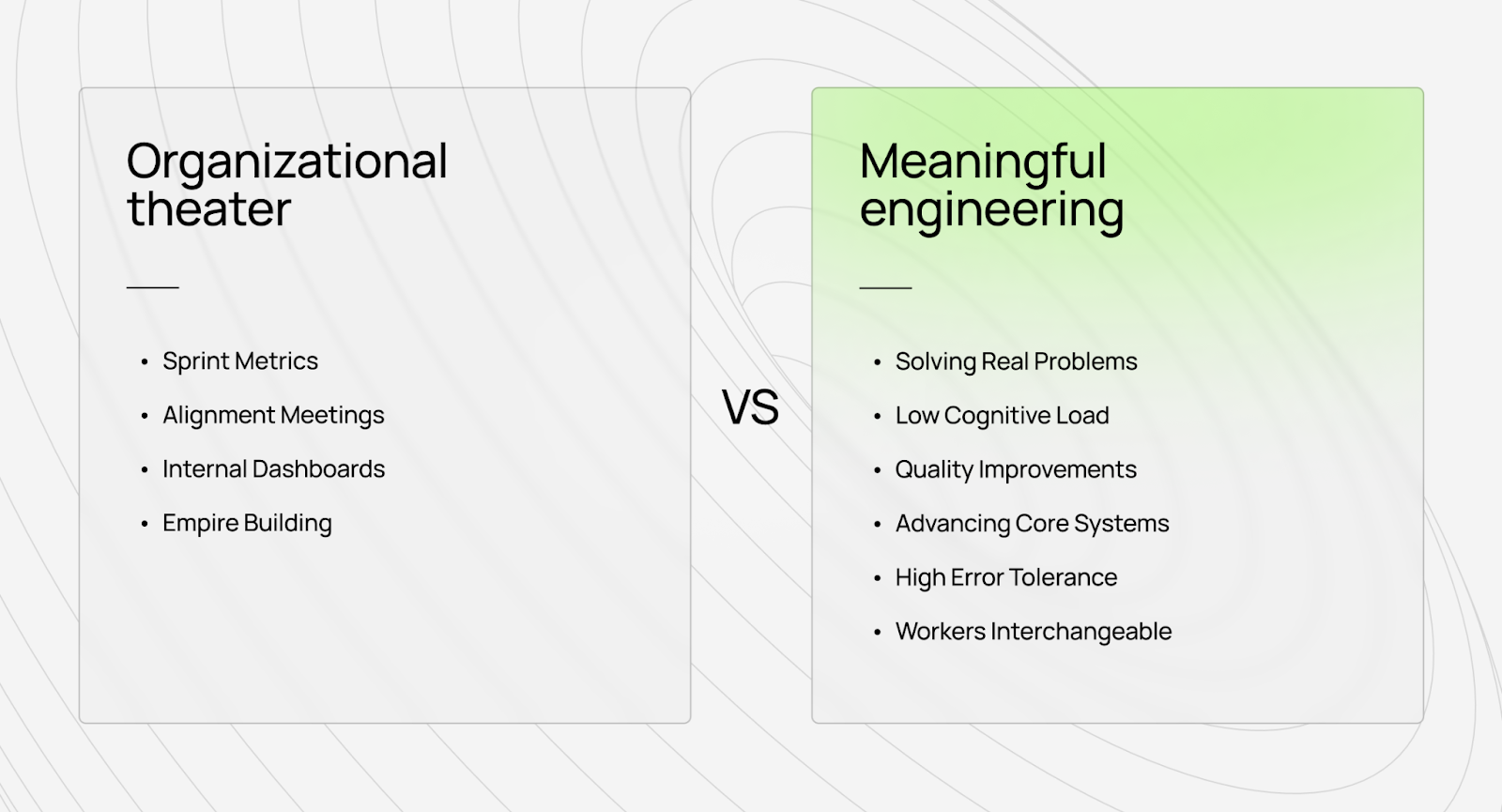
Both paths reward the same behaviors: growing teams, building unnecessary complexity, attending more meetings, and generating artifacts that prove you're "leadership material." Neither path optimizes for the thing that drew you to programming: solving technically interesting problems excellently.
The choice between front-end and software engineering feels consequential because career guides treat it as a permanent decision. But experienced developers know the truth: both paths lead to the same organizational dysfunction. The real choice is whether you're willing to accept work environments that can't distinguish excellent engineering from performance theater.
That's the problem worth solving. The specialization you choose just determines which meetings fill your calendar while you try to solve it.
AI training: an alternative to front-end development and software engineering
At this point, almost every coder has encountered AI-generated code. You've probably used it to write boilerplate, debug issues, or explore unfamiliar libraries. The code works sometimes. Other times, it confidently produces solutions that fail in subtle ways.
That gap between "code that compiles" and "code you'd actually ship"? Companies will pay you to evaluate it.
Models improve by learning from developers and engineers who can articulate that gap — who can explain not just that generated code is wrong, but why it's bad and what would make it better.
This isn't about job security or protecting your role from automation. It's about actively shaping what AI coding tools become capable of. The developers evaluating AI-generated code today directly influence what models can build tomorrow.
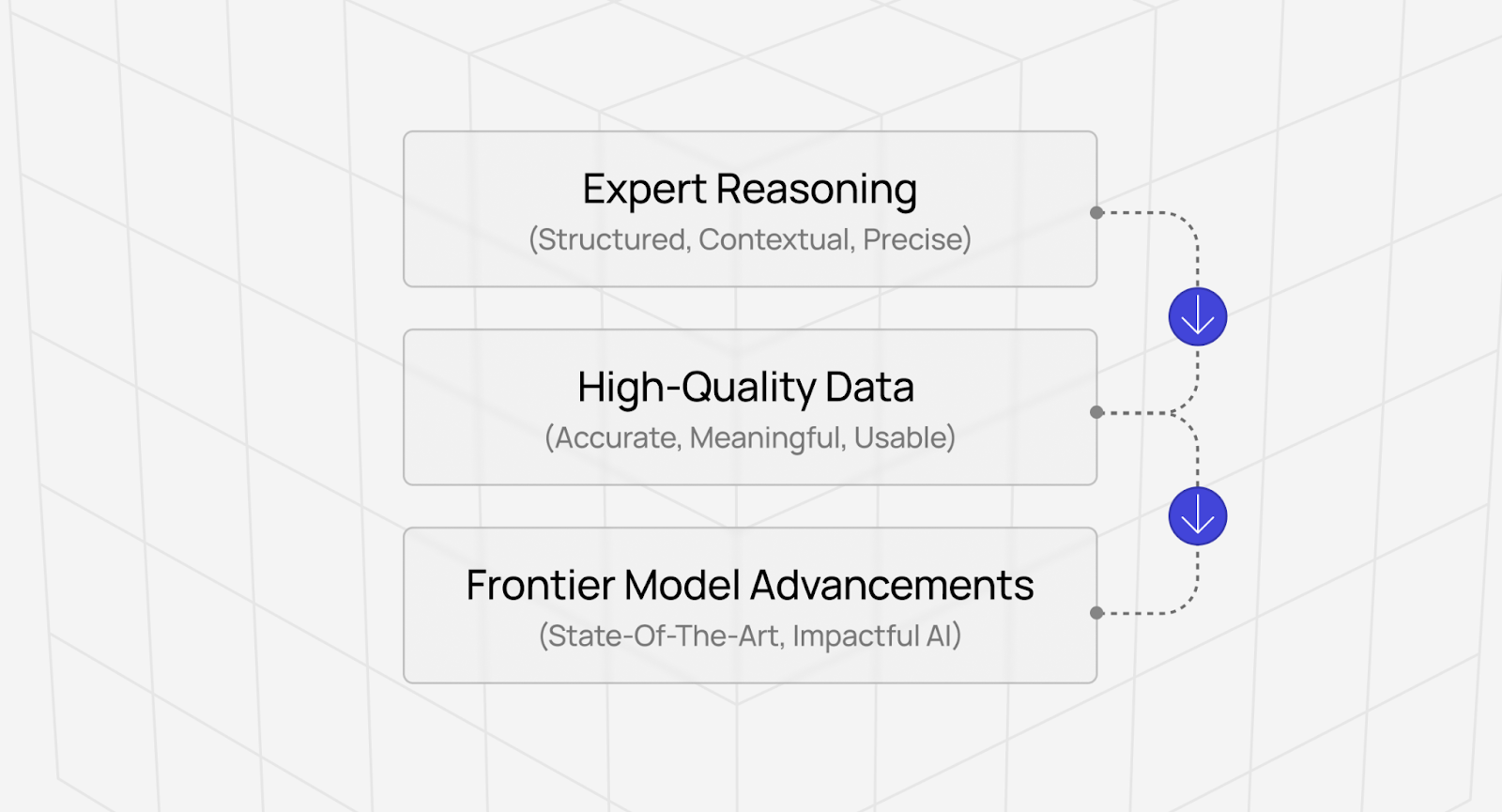
However, at DataAnnotation, we maintain selective standards because quality at the frontier scale requires genuine expertise, not just effort. If you're exploring AI training work because you heard it's easy money that anyone can do, we’re afraid, this isn't the right platform.
If you're looking to maximize hourly volume through minimal-effort clicking, there are commodity platforms better suited to that approach. If credentials matter more to you than demonstrated capability, our qualification process can discourage you.
Explore flexible coding projects at DataAnnotation
If you want to work where code quality determines frontier AI advancement and expertise compounds over time, DataAnnotation offers immediate access after a single qualification assessment.
If you want in, getting started is straightforward:
- Visit the DataAnnotation application page and click “Apply”
- Fill out the brief form with your background and availability
- Complete the Starter Assessment
- Check your inbox for the approval decision (which should arrive within a few days)
- Log in to your dashboard, choose your first project, and start earning
No signup fees. We stay selective to maintain quality standards. Just remember: you can only take the Starter Assessment once, so prepare thoroughly before starting.
Apply to DataAnnotation if you understand why quality beats volume in advancing frontier AI — and you have the expertise to contribute.
.jpeg)