
Most AI training platform comparisons miss what matters.
They list hourly rates, payment schedules, and sign-up requirements as if AI training platforms are interchangeable — just pick whichever pays the highest or accepts your qualifications fastest. This approach treats data annotation like commodity labor, where platforms compete purely on price and availability.
Want to know the reality?
Platforms differ fundamentally in how they measure quality, and that determines everything else about the work experience.
Some platforms screen for credentials and optimize for throughput. Workers complete high volumes of mechanical tasks, such as bounding boxes, binary classifications, and simple preference ratings, without understanding how their judgments shape model behavior.
Other platforms like DataAnnotation function as technology companies: we build measurement systems that identify quality independent of credentials, match workers to problems where expertise actually matters, and reward performance rather than volume.
But experienced professionals know better than to evaluate a single platform. This analysis compares ten alternatives to DataAnnotation, breaking down their pay structures, hiring requirements, and project types.
A quick overview of 10 DataAnnotation alternatives
At DataAnnotation, projects start at $20 per hour for general work requiring strong analytical skills. The rate starts at $40 per hour for coding expertise and STEM domain knowledge. Professional-level work requiring credentials in law, finance, or medicine starts at $50+ per hour.
We pay premium rates because we need workers who understand quality ceilings, spot when models optimize for the wrong objectives, and contribute judgment that automated systems can't replicate.
However, other platforms establish different qualification requirements, payment schedules, and project availability patterns.
The detailed breakdowns explain what you actually earn, what skills they need, and what trade-offs you accept.
Here's how they compare:
*Excludes OFAC-sanctioned regions
Each platform operates differently. The detailed breakdowns that follow explain what makes each alternative worth considering, what skills they prioritize, and what trade-offs you accept when choosing one platform over another.
1. Stellar AI
You've got a STEM background and want intellectually challenging work. Stellar AI specializes in AI alignment projects.
This includes ranking AI-generated responses, testing edge cases, and writing detailed explanations of reasoning. This isn't mechanical clicking.
Rates start at $20 per hour upon completion of the full qualification track. That qualification track demands serious commitment. After a brief eligibility screening, you face a three-stage assessment testing English fluency, logical consistency, and foundational Python familiarity.
Candidates with STEM degrees or equivalent professional experience in technical fields advance most successfully. Current hiring focuses on the US, UK, Canada, and Australia.
Pass all qualification stages, and you join multi-week sprints where small contributor cohorts iterate on the same datasets, creating continuity and allowing for deeper engagement with complex problems.
Stellar AI pros:
- Premium hourly rates reaching $40 for qualified technical contributors
- Intellectually demanding projects that involve advanced AI alignment challenges
- Multi-week sprint structure allowing deeper engagement with complex datasets
- Small cohort approach creating continuity and collaborative learning opportunities
Stellar AI cons:
- Strict NDA enforcement and extensive legal documentation
- A three-stage assessment process that can stretch several weeks
- The monthly payment cycle creates longer gaps between payouts than weekly alternatives
- Limited geographic hiring focused on the US, UK, Canada, and Australia
This platform suits contractors who prefer intellectually demanding projects and can handle extended payment cycles. If quick cash flow matters more than complex work, faster-paying alternatives make more sense.
2. Alignerr
You've got a philosophy or computer science background. Critical thinking becomes billable work with Alignerr.
The company's pay starts at $20 per hour for AI alignment projects requiring genuine analytical reasoning rather than mechanical task completion.
You evaluate how well AI outputs match human intent, identify potential safety issues in model responses, and suggest improvements that help systems better understand nuanced instructions.
Each project includes detailed evaluation rubrics, removing the guesswork about what constitutes quality standards.
The screening process tests your critical thinking and reading comprehension capabilities through scenario-based assessments. Pass these initial evaluations, and you access a streamlined workspace where you choose which available projects to accept.
Every submission receives review and scoring, providing direct feedback that helps you improve performance and unlock access to higher-paying assignments over time.
Alignerr pros:
- Work that emphasizes genuine analytical reasoning over mechanical task completion
- Detailed evaluation rubrics eliminate guesswork about quality standards
- Direct feedback on submissions helps you improve and unlock higher-paying work
- Intellectually stimulating projects exploring ethical dimensions of AI behavior
Alignerr cons:
- Weekly hour caps restrict maximum earning potential compared to unlimited-access platforms
- Manual invoice submission adds administrative overhead to the payment process
- Bi-weekly payment schedule through cryptocurrency (USDC) or Wise transfers
- Smaller project pool compared to larger mainstream annotation platforms
Best for: Workers who enjoy finding flaws in arguments and can articulate why something that sounds reasonable might actually cause harm.
3. Welocalize
Are you a certified translator or court interpreter? Linguistic expertise becomes your income source. Welocalize specializes in linguistic quality assurance and audio transcription.
English-language projects typically start at $18 per hour, positioning Welocalize well above crowdsourced micro-task platforms. Rates climb higher for in-demand language pairs, particularly those involving technical or specialized content translation.
The application process emphasizes your language skills from the start. You submit a sample translation demonstrating your command of terminology, grammar conventions, and cultural nuance.
After signing a standard non-disclosure agreement, the recruiting team evaluates your work against client glossaries and style guides. Approval grants access to their proprietary project portal, where linguistic assignments appear based on your qualified language pairs.
Welocalize pros:
- Specialized focus on linguistic work rather than general annotation tasks
- Premium rates for language professionals with technical or specialized content expertise
- A steady audio transcription pipeline provides consistent year-round opportunities
- Bi-weekly Payoneer payments ensure regular 14-day cash flow
Welocalize cons:
- Narrow task variety compared to multi-category annotation platforms
- Corporate documentation processes add administrative overhead
- Fortune 500 clients demand strict adherence to style guides and glossaries
The bi-weekly schedule balances regular income with manageable payment processing overhead. The platform rewards certified translators, court interpreters, and multilingual professionals with strong attention to detail, offering consistent work without the need to hunt for scattered gigs.
4. Remotasks
Are you entirely new to AI training work? Remotasks provides comprehensive training modules but pays significantly less than premium platforms.
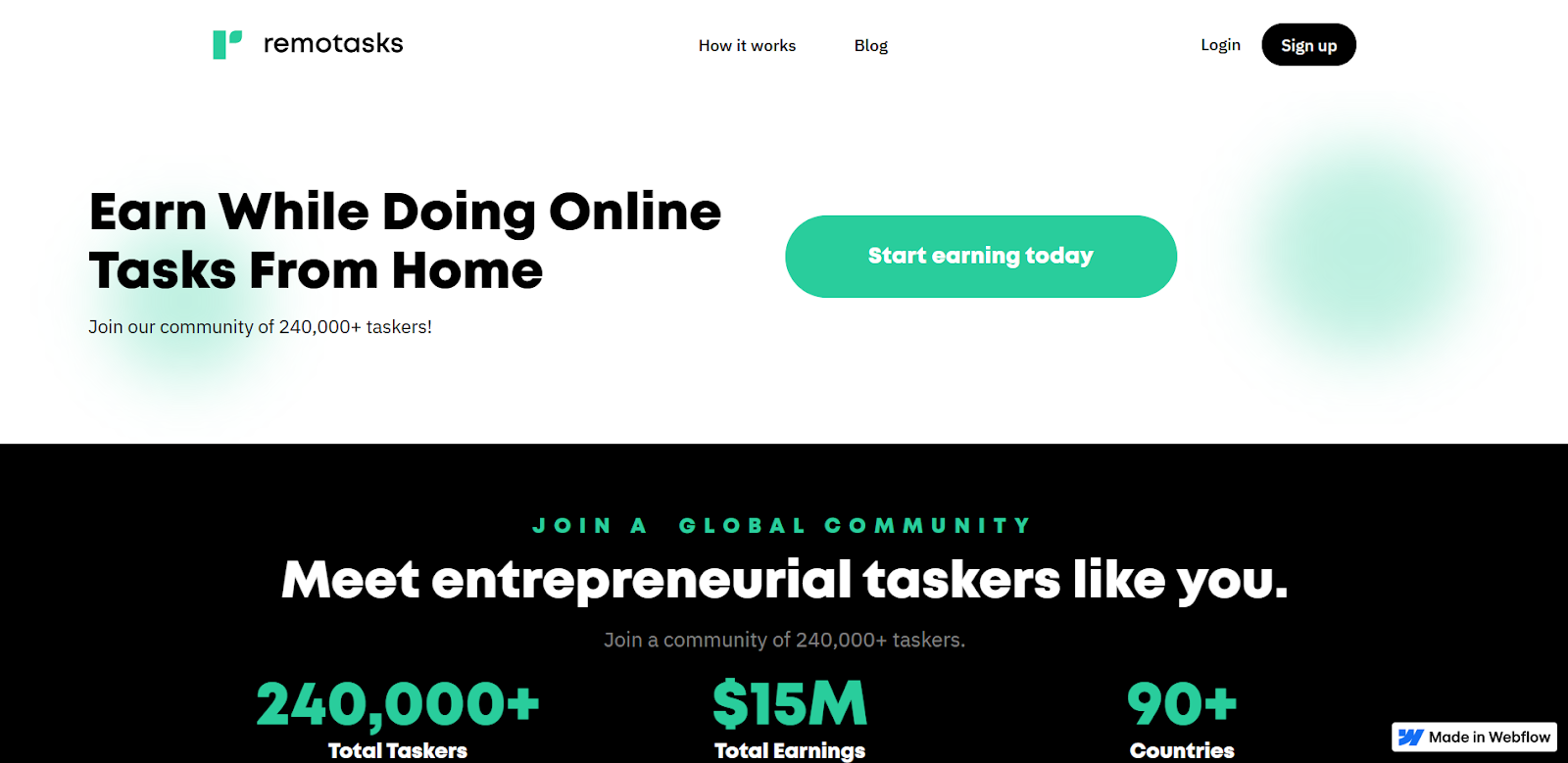
Volume-based microtasks define Remotasks' approach to AI training. The platform emphasizes accessibility for newcomers while maintaining lower compensation than premium alternatives.
Remotasks pay typically starts at $18 per hour across most project categories, with rates varying significantly based on task complexity and qualification level. This compensation structure positions Remotasks at the lower end of the annotation marketplace.
Getting started means navigating extensive training modules and qualification exams. Each project category requires its own assessment, creating a constant re-qualification cycle as you attempt to access new work types.
The multi-step qualification process can extend from days to weeks, depending on project complexity and your performance on initial assessments. You receive feedback during your first batches to help meet quality expectations, but this learning curve affects early earnings.
Remotasks pros:
- Comprehensive training modules with structured learning paths
- Accessible entry point for workers completely new to AI training tasks
- Clear task guidelines and detailed rubrics for each project type
- Weekly PayPal payments provide faster cash flow than monthly alternatives
Remotasks cons:
- Lower compensation ranging $5 to $25 per hour across most project categories
- Constant re-qualification cycle requires new exams for each work category
- Dramatic project availability swings with work disappearing without warning
- Quality-score penalties directly reduce earnings and limit access to better-paying projects
Best for: Complete beginners who need structured training and are willing to accept lower pay during the learning curve. Experienced workers seeking maximum hourly earnings typically find better opportunities elsewhere.
5. Invisible Technologies
If you prefer team collaboration over solo work, Invisible Technologies hires contractors (called Agents) for enterprise data operations and time-sensitive model-testing sprints.
Pay at Invisible Technologies starts at $18 per hour, reflecting a blended rate structure that rewards both consistent production work and sprint performance. This compensation model differs from pure hourly platforms by incorporating quality and velocity metrics.
The application process balances efficiency with personal evaluation. Your resume undergoes an initial screening for relevant experience, and then approved candidates join a webcam interview to demonstrate communication skills and problem-solving approaches through scenario exercises.
If you pass, you’ll receive a contractor agreement managed through Deel, which handles automated bi-monthly payouts globally.
Invisible Technologies pros:
- Collaborative pod structure replacing isolated solo work with team coordination
- Clear advancement pathways to pod-leadership roles after demonstrating consistent quality
- Diverse project rotation keeps work varied and intellectually engaging
- Structured teamwork through shared Slack coordination and task lists
Invisible Technologies cons:
- Rotating shift schedules occasionally require overnight coverage during launch windows
- Schedule variability makes it challenging to maintain predictable hours
- Mission-critical deadlines reduce schedule flexibility compared to pure gig platforms
- Bi-monthly Deel payments create longer gaps between payouts
Best for: Workers who perform better with teammates than in isolation, and who can flex their schedule around client-driven deadlines in exchange for variety and advancement opportunities.
6. TELUS Digital AI
Long-term stability defines TELUS Digital AI's approach to remote AI training work.
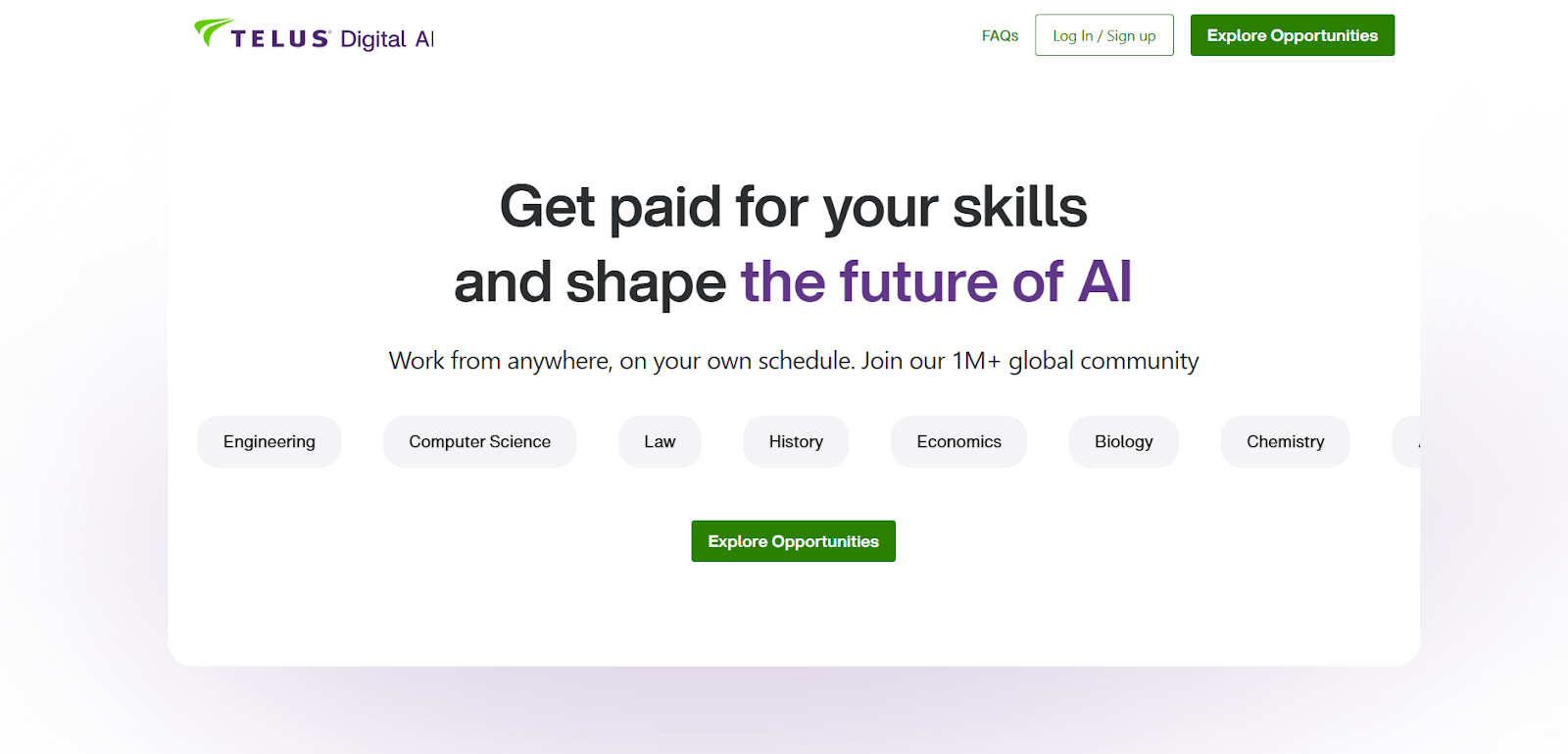
The platform specializes in search result rating, maps annotation, and audio tagging projects that require consistent contributor performance over extended periods.
The pay for US-based workers typically starts at $14 per hour, with rates varying by geographic region and project complexity. This compensation structure falls toward the lower end compared to premium annotation platforms but offers employment-like predictability.
Requirements extend beyond basic qualifications. You must reside in your claimed market for at least six months, demonstrating a stable local presence. Projects require both smartphone and computer access, as some tasks test mobile search experiences while others demand desktop-based interfaces.
The application process includes verification of your device capabilities and location history.
TELUS Digital AI pros:
- Long-term project relationships provide consistent work over extended periods
- Fixed weekly hours, creating a predictable income similar to part-time employment
- Established payment infrastructure through ADP's professional payroll system
- Clear expectations and a structured work environment
TELUS Digital AI cons:
- Fixed schedule requirements, eliminating the schedule freedom that typical gig workers seek
- Monthly payment cycle requiring careful cash flow management
- Six-month residency requirement limiting geographic mobility
Payments arrive monthly via bank transfer through ADP's payroll system, treating you more like a long-term contractor than a project-based freelancer. The monthly cycle requires more careful cash flow management than weekly payment alternatives.
TELUS International attracts workers who prioritize stable hours and long-term project assignments over maximum flexibility or premium hourly rates.
7. Outlier
You want flexible AI training work without rigid schedules dictating when you log in. Outlier delivers exactly that once you clear their invite-only waitlist and pass a 15-minute English fluency assessment.
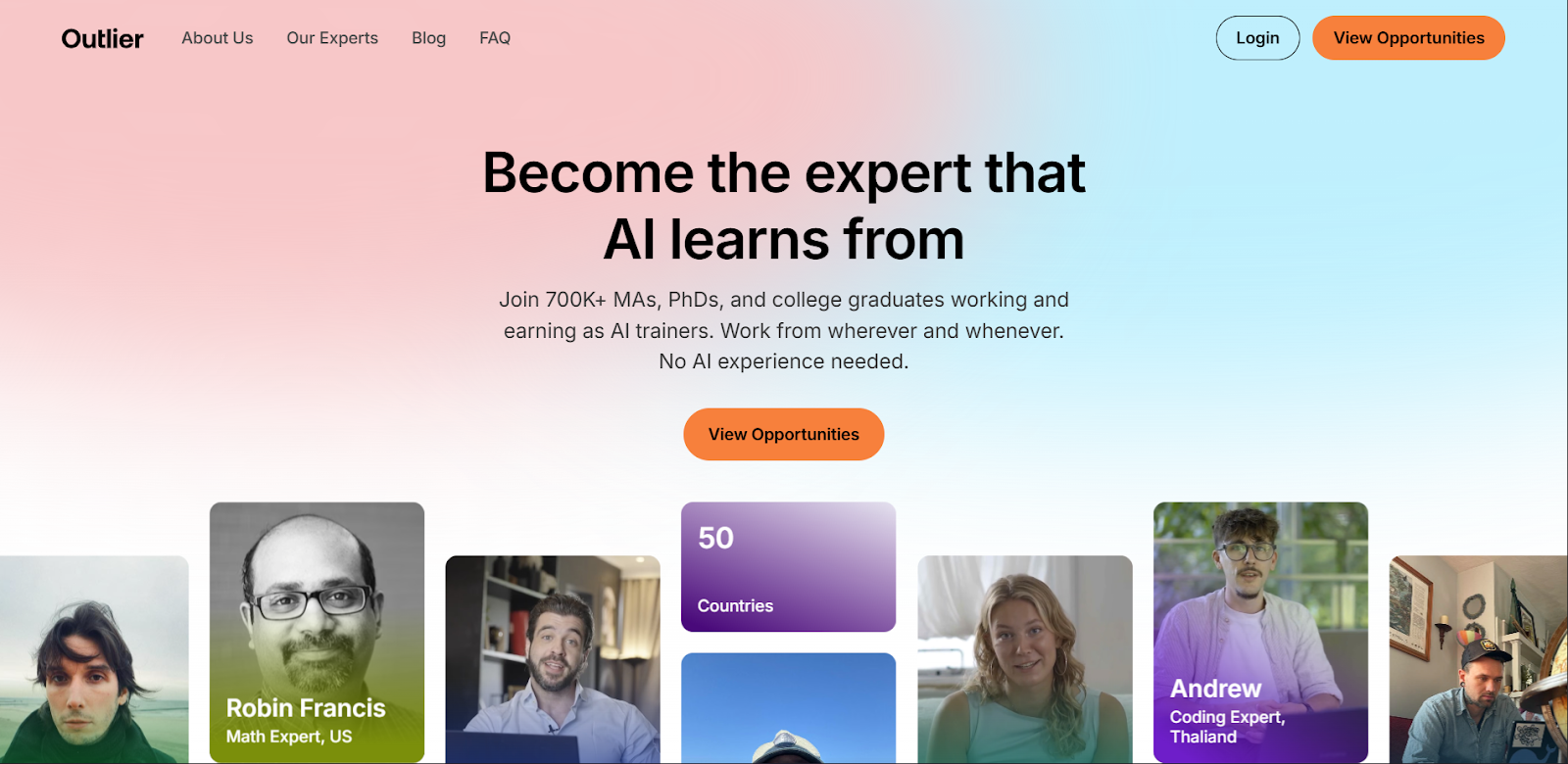
Projects start at $10 per hour. The work stays manageable. You categorize text snippets, flag objects in images, or verify existing annotations. Everything runs through a web interface, no special software required
Outlier pros:
- Schedule autonomy: Set your own hours and choose which projects to accept
- Competitive pay that significantly exceeds typical crowdwork platforms
- Fresh datasets create a steady demand for quality annotation work
- Straightforward PayPal payments that arrive predictably twice monthly
Outlier cons:
- Work appears in unpredictable bursts. Queues empty without warning.
- Qualification exams take longer than quick-signup alternatives
- Projects fluctuate based on client demand
Best for: Remote workers who value scheduling freedom over guaranteed volume and don’t mind checking the dashboard for new opportunities.
8. Mindrift
You're a strong writer. You'd rather evaluate AI conversations than plug numbers into spreadsheets. Mindrift is right for you.

You assess how well AI follows instructions, then rewrite or rank responses. The work feels more like editing chatbot conversations than data entry. The work feels more like editing chatbot conversations than traditional data entry.
Mindrift’s AI training rate starts at $10 per hour. Rates stay stable because projects are billed by hours worked rather than per-completed task, removing piece-rate uncertainty.
Mindrift welcomes contributors from almost anywhere, provided you demonstrate reliable internet access and can pass a 10-question English grammar assessment.
Mindrift pros:
- Steady project availability following their 2023 client expansion
- Hourly billing eliminates piece-rate compensation uncertainty
- Weekly payments with same-day Friday payouts through Wise
- Focus on conversational AI rather than mechanical data entry tasks
Mindrift cons:
- Weekly quota requirement limiting your schedule flexibility
- Support is limited to a single Slack workspace with occasional delays
- Less variety in project types compared to multi-category platforms
Best for: AI trainers who value predictable weekly earnings and don't mind meeting modest time commitments in exchange for stable project flow.
9. Appen (CrowdGen)
Appen operates a crowdsourced marketplace for bite-sized AI training projects.
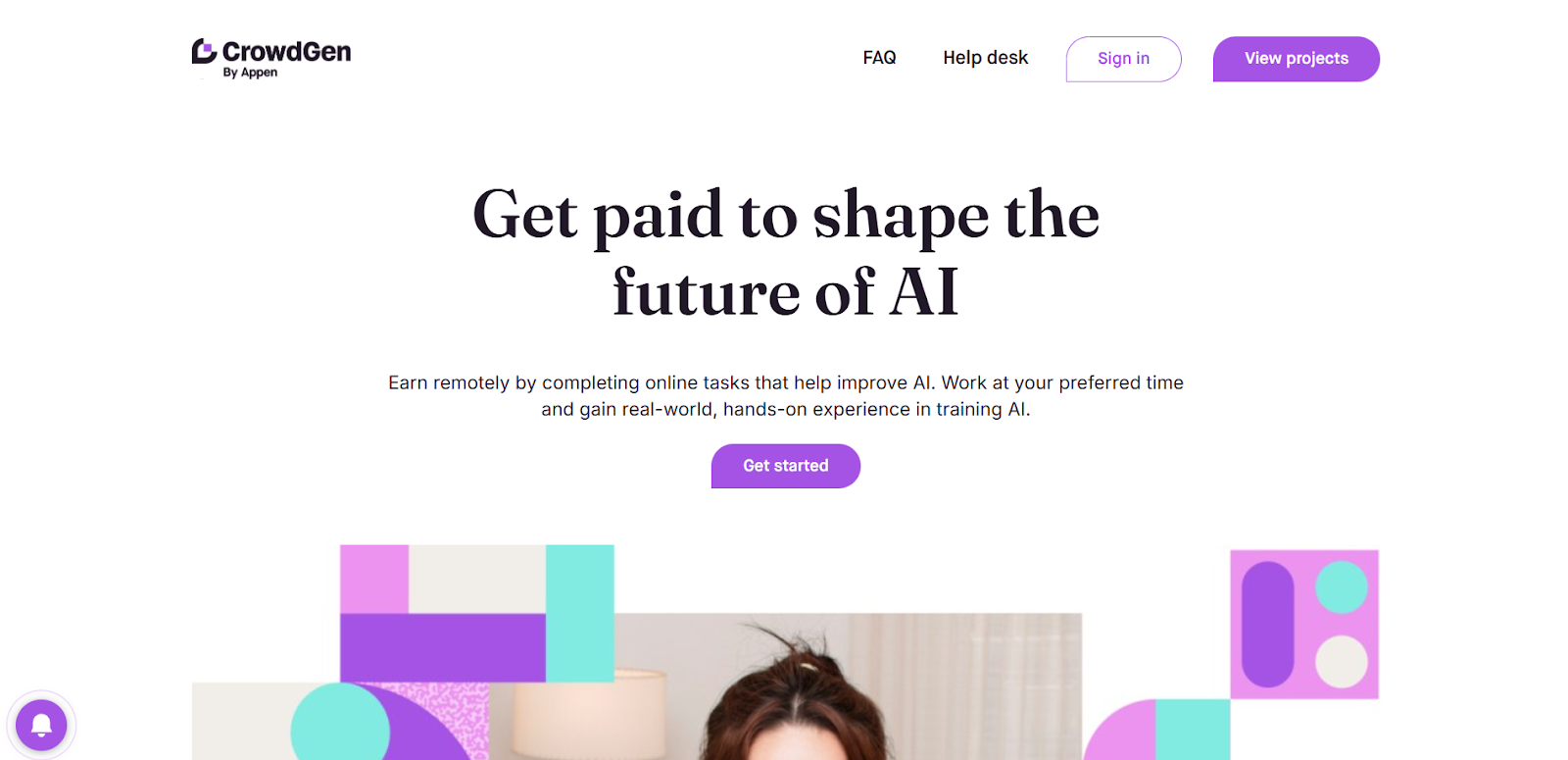
Most work pays between $10 and $20 per hour, aligning with industry averages for basic data annotation tasks. You spend time rating the relevance of search results, recording voice samples on your smartphone, or categorizing social media posts.
Each project takes only minutes, allowing you to work during lunch breaks or while multitasking.
The getting-started process requires patience but follows a clear path. You create a profile specifying your languages, location, and available devices. Each project type demands its own qualification quiz.
Failing means waiting to retake the assessment; passing unlocks training modules showing exactly what clients expect. This structure means you always understand project requirements before starting, though it also creates setup overhead when you explore new work categories.
Appen pros:
- Massive global task pool accommodates hundreds of thousands of contributors
- Phone-only project options for workers without dedicated computer setups
- Straightforward qualification process with explicit training modules before starting
- Minimal barriers to entry make it accessible for complete beginners
Appen cons:
- Unpredictable project availability that fluctuates without advance notice
- Regional pay variations that can reduce rates in lower-wage markets
- The monthly Payoneer payment cycle requires extended budget management
- $10-20 hourly range, positioning it at the lower end of annotation compensation
Best for: Workers who want low-commitment tasks they can complete in spare moments, and who can handle income variability in exchange for minimal qualification barriers. If you don't mind juggling multiple small projects and can handle variable availability, Appen provides an accessible entry point into AI training work with minimal qualification barriers.
10. OneForma (Centific)
Do you speak multiple languages? Time to get paid for it. OneForma connects bilingual workers with projects to annotate data, transcribe audio, and evaluate search results in those languages.

You are helping train AI systems to understand diverse languages and cultural contexts.
Pay starts from $8 per hour, depending on your language pair. Arabic, Mandarin, and Japanese command premium rates, while Spanish, French, and German work typically sits at the lower end of this spectrum.
Getting started requires creating a profile and completing a browser-based skills assessment that tests your proficiency in the languages you stated. No complex software downloads or technical setup required.
Once approved, you can access a project dashboard that shows available work across 200-plus countries, making OneForma one of the most geographically accessible platforms for international contractors.
OneForma pros:
- Constant project flow across multiple language pairs and task categories
- Accessible to 200-plus countries, making it one of the most globally inclusive platforms
- A diverse project portfolio ranging from audio transcription to search evaluation
- Extensive client base supporting steady work queues year-round
OneForma cons:
- A restricted payment cycle means payments may take up to 40 days to arrive
- Lower hourly rates compared to premium platforms, despite consistent availability
- Pay variations based on language pair demand and regional market rates
The extended payment timeline creates cash flow challenges compared to weekly or bi-weekly alternatives. The lower hourly ceiling also means you earn less than premium platforms despite consistent availability.
Best for: Multilingual contractors prioritizing steady volume over maximum hourly rates.
Why DataAnnotation wins
These platforms share common frustrations:
- Task scarcity that leaves you refreshing dashboards, hoping for work
- Pay volatility that makes monthly budgeting difficult
- Complex qualification processes that delay your first earnings
- Rigid scheduling requirements that eliminate the flexibility you sought in the first place
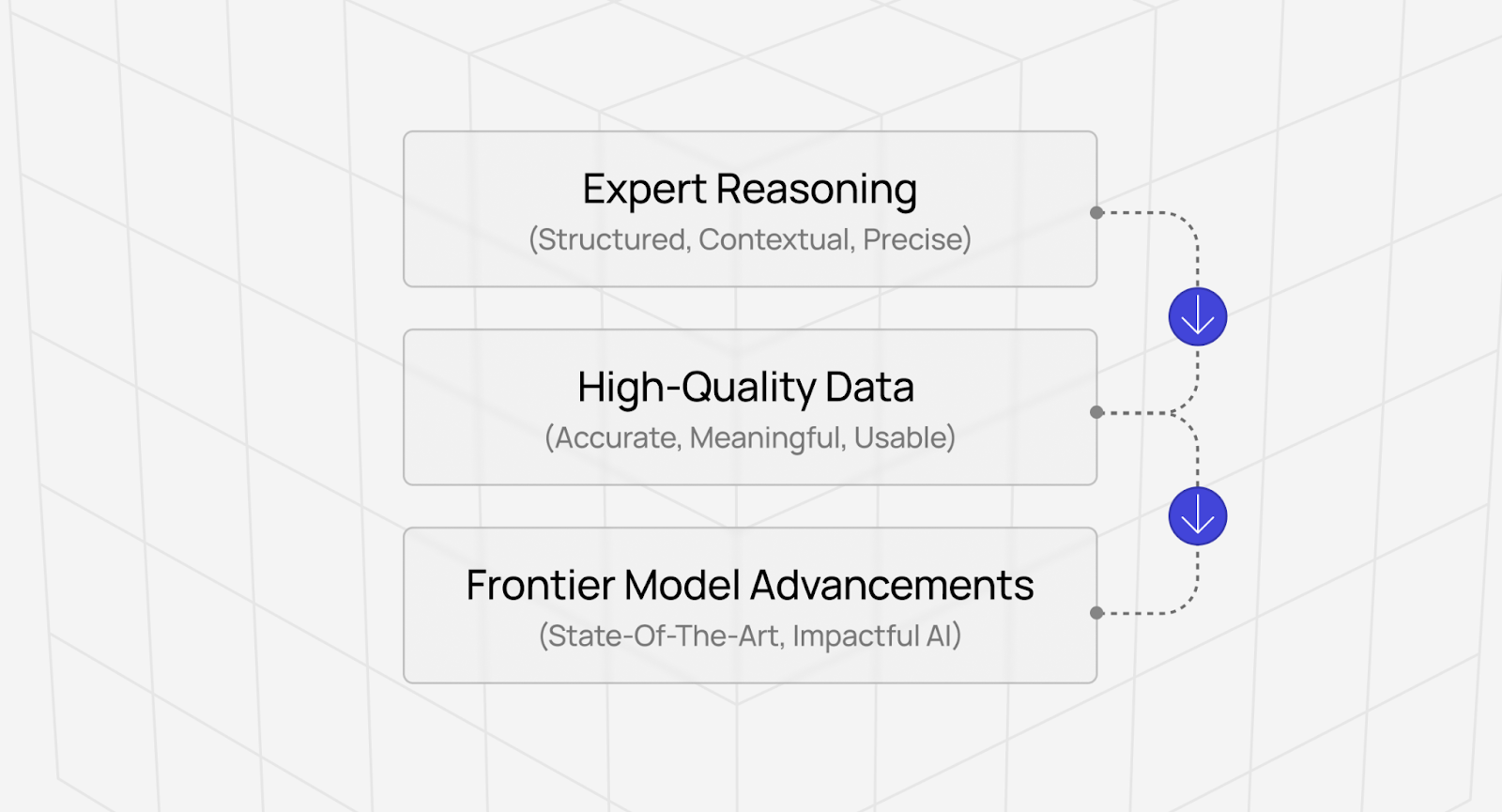
At DataAnnotation, we do not view you as a "task worker." You are a collaborator helping to solve the primary bottleneck to Artificial General Intelligence (AGI): High-Quality Human Reasoning.
We value human reasoning: nuance, intuition, and "street smarts" that models currently lack.
If you have genuine expertise (coding ability, STEM knowledge, professional credentials, or exceptional critical thinking), you can help build the most important technology of our time at DataAnnotation.
Our quality AI training work is for:
Domain experts who want their expertise to matter: For instance, computational chemists who are tired of pharmaceutical roles where their knowledge gets underutilized. Mathematicians seeking intellectual engagement beyond teaching introductory calculus. Programmers who want to apply their craft to advancing AI rather than debugging legacy enterprise software.
Professionals who need flexible income without sacrificing intellectual standards: For example, the researcher awaiting grant funding who can contribute to frontier model training while maintaining their primary focus. The attorney with reduced hours who can apply legal reasoning to AI safety problems. The STEM professional who needs work without geographic constraints.
Creative professionals who understand craft: Examples include writers who can distinguish between generic AI prose and genuinely compelling narratives. Poets who recognize that technique without creativity produces mediocre work, regardless of formal training.
People who care about contributing to AGI development: Workers who understand that training frontier models matters more than optimizing their personal hourly rate. Experts who recognize that their knowledge becomes exponentially more valuable when transferred to AI systems that operate at scale.
The poetry you write serves as a model for creativity and language. The code you evaluate helps them learn software engineering judgment. The scientific reasoning you demonstrate advances their capability to assist with research.
How to get an AI training job?
At DataAnnotation, we operate through a tiered qualification system that validates expertise and rewards demonstrated performance.
Entry starts with a Starter Assessment that typically takes about an hour to complete. This isn't a resume screen or a credential check — it's a performance-based evaluation that assesses whether you can do the work.
Pass it, and you enter a compensation structure that recognizes different levels of expertise:
- General projects: Starting at $20 per hour for evaluating chatbot responses, comparing AI outputs, and writing challenging prompts
- Multilingual projects: Starting at $20 per hour for translation and localization work across many languages
- Coding projects: Starting at $40 per hour for code evaluation and AI performance assessment across Python, JavaScript, HTML, C++, C#, SQL, and other languages
- STEM projects: Starting at $40 per hour for domain-specific work requiring bachelor's through PhD-level knowledge in mathematics, physics, biology, and chemistry
- Professional projects: Starting at $50 per hour for specialized work requiring credentials in law, finance, or medicine
Once qualified, you select projects from a dashboard showing available work that matches your expertise level. Project descriptions outline requirements, expected time commitment, and specific deliverables.
You can choose your work hours. You can work daily, weekly, or whenever projects fit your schedule. There are no minimum hour requirements, no mandatory login schedules, and no penalties for taking time away when other priorities demand attention.
The work here at DataAnnotation fits your life rather than controlling it.
Explore AI training work at DataAnnotation today
The gap between models that pass benchmarks and those that work in production lies in the quality of the training data. If your background includes technical expertise, domain knowledge, or the critical thinking to spot what automated systems miss, AI training at DataAnnotation positions you at the frontier of AI development.
Not as a button-clicker earning side income, but as someone whose judgment determines whether billion-dollar training runs advance capabilities or learn to optimize the wrong objectives.
Getting from interested to earning takes five straightforward steps:
- Visit the DataAnnotation application page and click “Apply”
- Fill out the brief form with your background and availability
- Complete the Starter Assessment, which tests your critical thinking and attention to detail
- Check your inbox for the approval decision (which should arrive within a few days)
- Log in to your dashboard, choose your first project, and start earning
No signup fees. We stay selective to maintain quality standards. Just remember: you can only take the Starter Assessment once, so prepare thoroughly before starting.
Apply to DataAnnotation if you understand why quality beats volume in advancing frontier AI — and you have the expertise to contribute.